Hikers Spotted 3 Stranded ‘Dinosaur Fish’ In A Michigan River, And Rescuers Found 27

Hikers Spotted 3 Stranded 'Dinosaur Fish' In A Michigan River, And Rescuers Found 27© (©)A phone call to a poaching hotline set off something no one expected, pulling crews deep into the Michigan wilderness on an urgent mission to save fish that have roamed Earth's rivers since the age of dinosaurs.
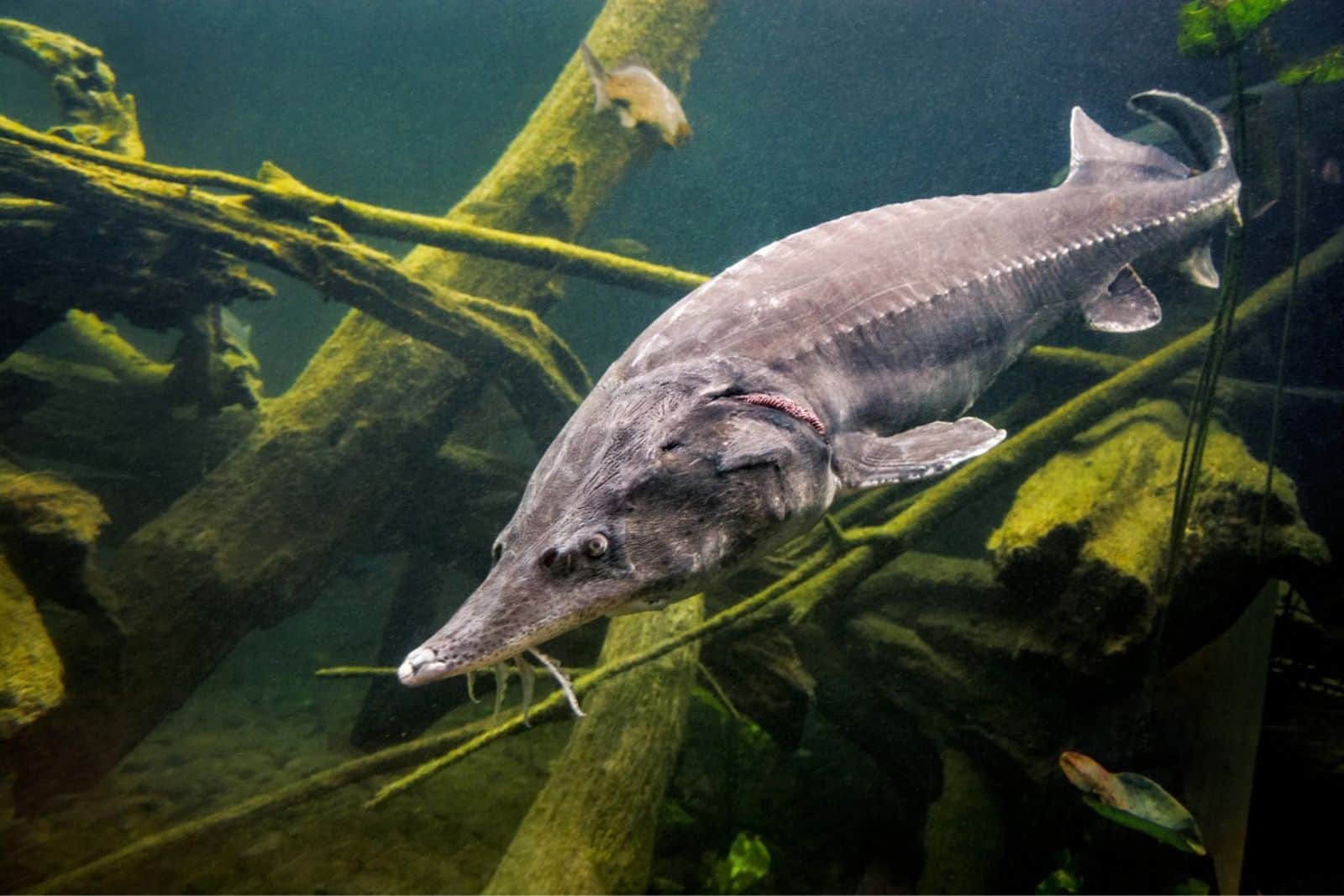
On Aug. 23, hikers on the North Country Trail crossed Michigan’s West Branch Ontonagon River, downstream of Victoria Dam, and noticed three large fish stuck in a shallow, cut-off pool. They called the Michigan DNR’s Report All Poaching hotline. That one call set off three separate rescue missions, and by the time crews finished, they had pulled 27 lake sturgeon, fish so old-looking that people sometimes call them “dinosaur fish,” out of water that was about to run dry.
Lake sturgeon first show up in the fossil record from 100 million to 150 million years ago, according to the Michigan DNR. This particular group was stuck in a part of the river that barely flows for much of the year, and the reason traces back to a dam.
How the Rescue Grew From Two Fish to 27
DNR fisheries technicians Kyle Urban and Jack Cole were first on scene and found two sturgeon in the pool the hikers had reported. They carried the fish nearly a mile over rough ground to reach flowing water, keeping the sturgeon’s gills underwater in hiking bags the whole way.
A second mission, run with the Keweenaw Bay Indian Community and the Upper Peninsula Power Company, moved ten more fish. A third brought in extra staff and equipment, and crews found roughly two dozen more sturgeon swimming in a murky, disconnected pool nearby. In total, 27 fish were moved to safety, including one measuring 55 inches. None of the rescued sturgeon were older than 28, though the species can live well past 100.
Why Losing These Fish Would Have Hurt a Recovering Population
Lake sturgeon have been listed as a threatened species in Michigan since 1994, and the state has stocked young sturgeon in the Ontonagon River since 1998 to help rebuild the population there. They are also slow to reproduce: males typically need around 15 years to mature, and females need 20 to 25, according to Michigan Sea Grant.
Because the Ontonagon population is still recovering, the DNR said losing all 27 fish would have been “extremely detrimental.” Every adult that survives to spawning age matters more in a population this small.
What Caused the Low Water, and What the State Is Changing
Victoria Dam is run by the Upper Peninsula Power Company, which operates under a federal license to generate hydroelectric power. Under that license, water is pulled from this stretch of the river and piped to a powerhouse downstream, rejoining the river later. That leaves the channel between the dam and the powerhouse with little or no flow for parts of the year, including the section where the sturgeon were trapped, according to the DNR.
As crews worked out how to reach the rest of the fish, the power company released extra water into the channel, within what its permit allows, to buy the remaining sturgeon more room to move. The DNR is now reviewing historical flow and temperature data and looking at extra surveys with its partners, aiming to catch stranded fish earlier next time.
“We can’t be everywhere at once,” said Cory Kovacs, manager of the DNR’s Lake Superior unit. The agency credited the hikers directly: without that one report, the rescue would never have started.
Source: Nature



0 Comments