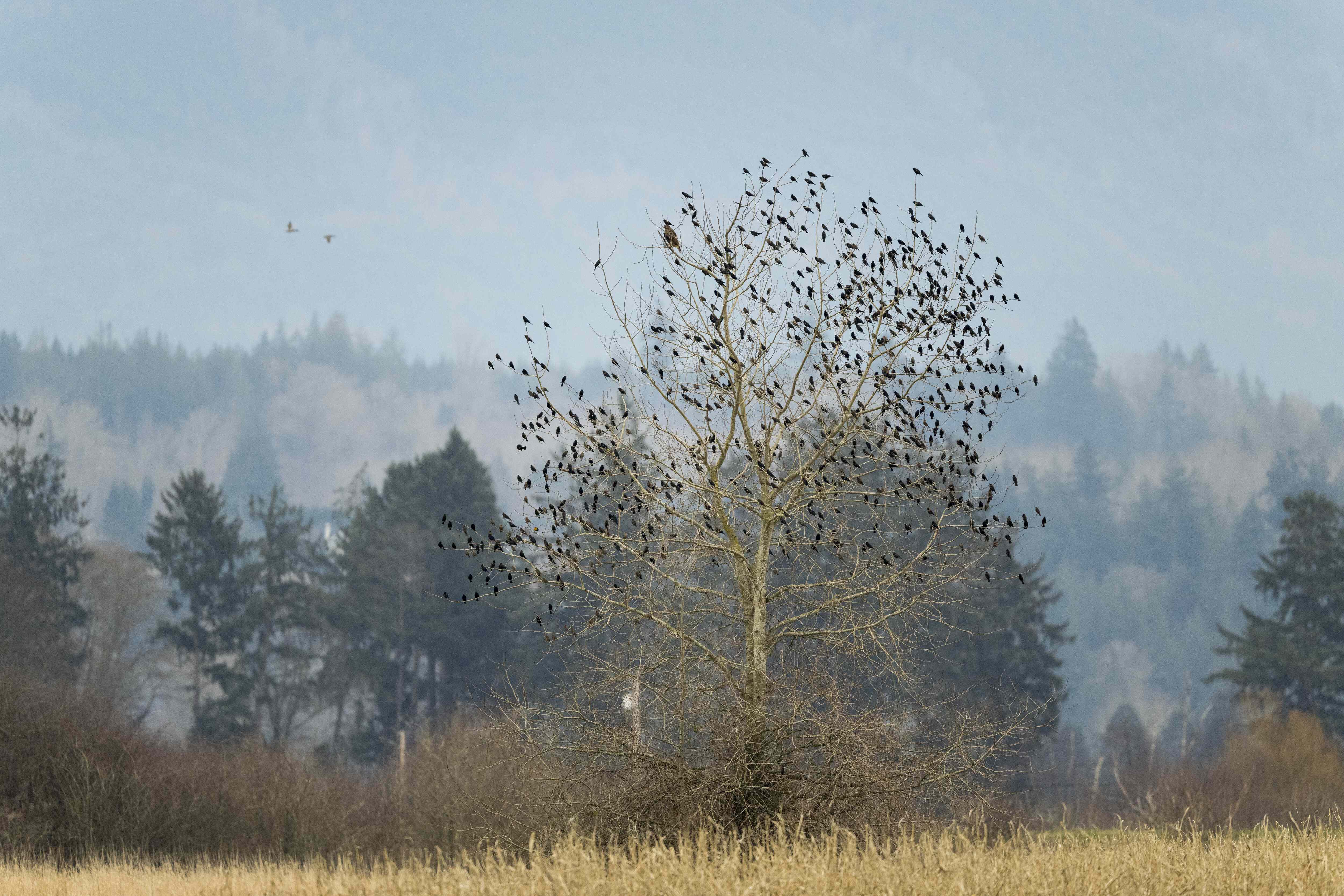
What It Means When Hundreds Of Blackbirds Suddenly Gather In Your Trees

Blackbirds form huge flocks in the fall as they prepare to head south for winter. But some stick around all season long, roosting by the hundreds in our trees. Why are they doing this, and what does it all mean?
Roosting in fall and winter is a normal behavior for many birds. Blackbirds may congregate by the thousands in a line of trees—usually deciduous trees in fall and conifers in winter. These “blackbirds” look alike from a distance, but if you look closer, you’ll likely see grackles, cowbirds, European starlings, and red-winged blackbirds roosting together. Sometimes robins join the mix.
Some of the roosting birds eventually migrate south, forming a vast river of blackbirds that undulates and swirls across the sky. This phenomenon—scientifically known as murmuration—is an incredible sight to see. But in the South, many blackbirds hang around in fall and winter.
Why Do Blackbirds Gather In Trees?
Scientists aren’t sure exactly why blackbirds roost together by the hundreds in trees, but they do have theories. The birds could be huddling for warmth, finding safety in numbers, or congregating near food sources. Blackbirds often roost around fallow fields, pastures, and grasslands with plentiful seeds.
Sometimes this social behavior becomes disruptive. When they roost near homes, blackbirds can be very noisy and overtake feeders. If the blackbirds in your tree become troublesome, take down your bird feeders until they move on. You can also use bird spikes or metallic streamers to discourage blackbirds from landing on your porch and windowsills. Farmers sometimes use noisemakers and other scare devices to protect their crops.
But if the blackbirds aren’t bothering you, there is no reason to bother them. Stop and enjoy this fascinating sign of the changing season.
on Southern Living
Source: Nature



0 Comments