Scientists discover a surprising hormonal connection between cats and their ownersSanjana Gajbhiye Sun, October 18, 2026 at 1:06 PM UTC

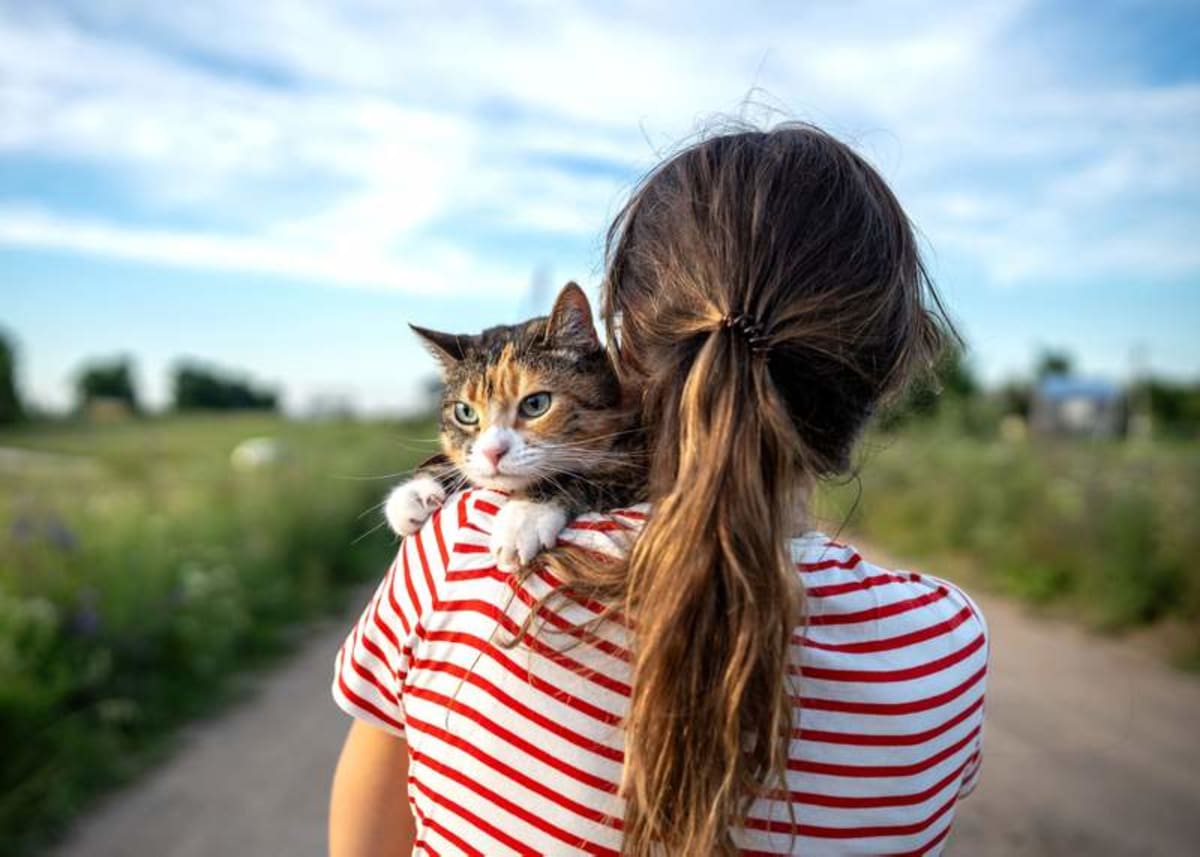
The bond between cats and their owners may involve more than affection. Credit: Shutterstock
For many cat owners, a familiar purr or a cat settling into their lap is a welcome part of the day.
A small new study suggests that this companionship may also be linked to hormonal changes in cats and their owners.
Researchers found that people whose cats had higher levels of oxytocin, a hormone involved in social bonding, reported fewer negative moods.
Those owners also tended to have higher oxytocin levels themselves.
The findings offer a possible biological link between cats and the people they live with.
They don’t prove that a cat makes someone happier, but they give researchers a reason to look more closely at that everyday relationship.
The comfort of company
Saho Takagi of Kyoto University led the study with colleagues at Azabu University. For Takagi, the findings bring to mind a familiar scene.
“I think many cat owners are familiar with the sense of comfort and peace they feel when their cat climbs onto their lap seeking affection, they start to pet it, and the cat begins purring contentedly,” Takagi said.
“Our findings suggest that this feeling may be partly reflected in the hormonal connection between cats and their owners, particularly through oxytocin, a hormone involved in the formation of parent-child bonds and social relationships.”
Following cats at home
The team followed 19 owners and 29 cats for a month, studying them in their own homes.
Owners collected urine samples from themselves and their cats so the researchers could measure hormone levels.
Getting a sample from a cat was understandably harder than getting one from a person. Five cats never provided a sample, leaving 24 in the hormone analysis.
The cats also wore small Bluetooth tags on their collars, which helped a phone measure how close they stayed to their owners.
Owners carried the phones at home and kept them near their beds overnight.
Each owner completed a questionnaire about their mood over the previous two weeks. This covered feelings such as anger, tension, tiredness and energy.
What the hormones showed
Owners whose cats had more oxytocin reported feeling less angry, confused, tense and down. Their overall scores for negative moods were lower, too.
The owners’ own oxytocin levels had a more limited connection with mood: higher levels were linked only to less anger.
In other words, the cat’s hormone levels were associated with more of the owner’s feelings than the person’s own hormone levels were.
People with more cortisol, a hormone involved in the stress response, reported more tension, fatigue, confusion and low mood. They also tended to have cats with less oxytocin.
These were patterns across the study group, so they cannot tell an individual owner what their cat is feeling. Nor do they establish that oxytocin caused the differences in mood.
Why the connection exists
The researchers have several possible explanations, but none is settled. A person’s oxytocin can reflect many parts of life, including relationships with other people.
A cat’s oxytocin might reflect its time with its owner more closely. That could help explain why the cat’s levels had a broader connection with the owner’s mood.
Another possibility is that the cat measurements simply contained less random variation. With such a small group, the researchers need more evidence before drawing a firm conclusion.
Cats with energetic owners
The collar tags revealed another interesting pattern: people whose cats stayed closer reported feeling more energetic and active. The mood questionnaire describes this as “vigor.”
That was the only mood measure linked to closeness. Having a cat nearby wasn’t associated with lower anger, tension or the other negative feelings measured.
Simply living with a cat for more years wasn’t linked to greater energy, either.
The researchers suggested that the length of ownership may miss something about what daily life together is actually like.
The tags could only measure proximity, though. They couldn’t tell whether an owner was petting a cat, playing with it or sitting nearby while it slept.
Stress looked different
Cats and their owners didn’t show a clear match in cortisol levels. Some earlier dog studies have found that dogs with higher cortisol also have owners with higher levels.
The researchers suggested that cats’ more solitary evolutionary background might play a role, compared with dogs’ group-living ancestors.
But the studies used different methods, which makes a direct comparison difficult.
Timing could also matter: owners collected their urine first thing in the morning, while cat samples came whenever the animals happened to urinate.
That difference may have made a shared stress pattern harder to spot.
What remains unclear
The study was small, and 16 of the 19 owners were women.
Some findings also weakened when researchers averaged results by household instead of counting each owner-cat pair separately.
Cats and people share more than affection: they also share household noise, temperatures and routines. Those surroundings could contribute to the hormone patterns.
The direction of the relationship remains an open question.
Owners who feel better may spend more affectionate time with their cats, while a sociable cat might help its owner feel better.
Longer studies, with more households and samples collected at matching times, could help explain how these relationships work.
The study is published in the journal iScience03317-1?_returnURL=https%3A%2F%2Flinkinghub.elsevier.com%2Fretrieve%2Fpii%2FS2589004226033171%3Fshowall%3Dtrue).
—–
Like what you read? Subscribe to our newsletter for engaging articles, exclusive content, and the latest updates.
Check us out on EarthSnap, a free app brought to you by Eric Ralls and Earth.com.
—–
Source: Nature



0 Comments